……………………………………………………………………………………………
Niall O’Dowd reflects on John Hume’s time as leader of SDLP
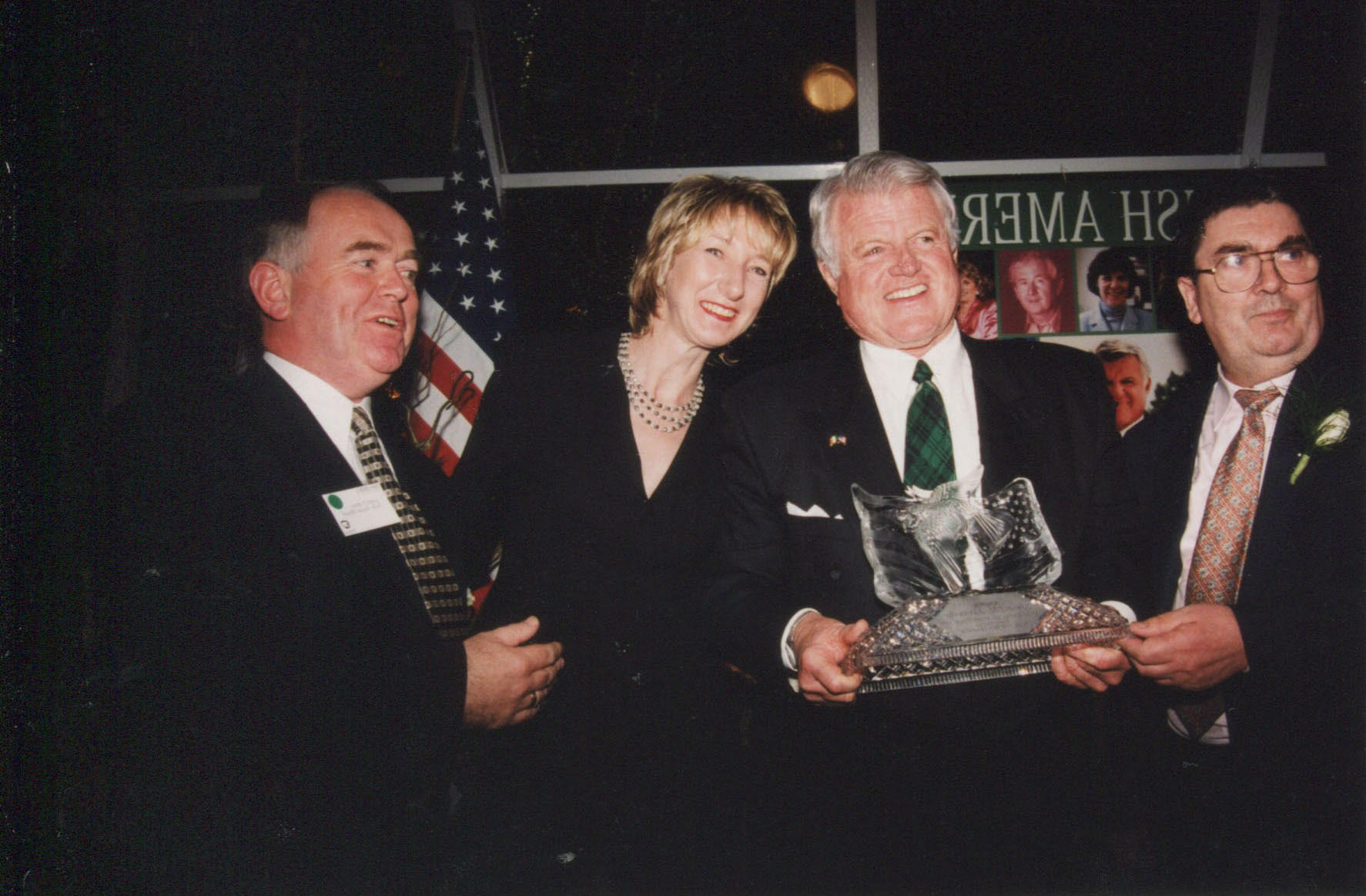
 In July 1998, the Northern Ireland power-sharing government sat for the first time. It was an incredible historic breakthrough and John Hume could take full credit, even though he was in fading health. Senator Edward Kennedy among others came to witness his incredible achievement. It was an honor to be there on the day.
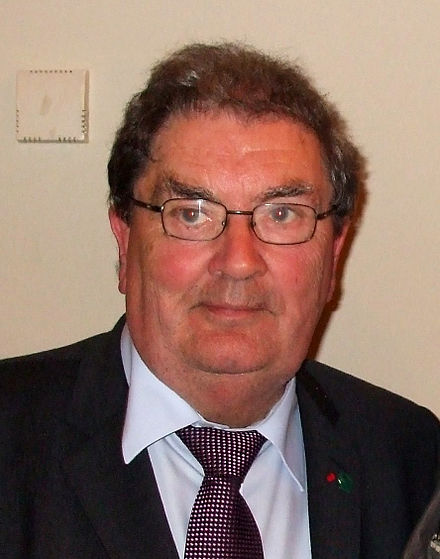
STORMONT, JULY 1998: He shuffled rather than walked from his car in the parking lot towards the big building directly ahead of him. Up close he had clearly lost considerable weight, and his pale colour reflected someone who had just overcome a serious illness.
John Hume walked almost unnoticed into the main hall at Stormont on Thursday, past the bank of television cameras eager to catch every morsel from the mouths of David Trimble. Seamus Mallon and Gerry Adams. He walked through the serried files of journalists, exchanging pleasantries but sparking none of the frenzy that a Trimble or Adams appearance caused on this day. John Hume was almost the forgotten man on the biggest day in recent Irish history. Read more.
Deaglán de Bréadún considers John Hume’s greatest achievements
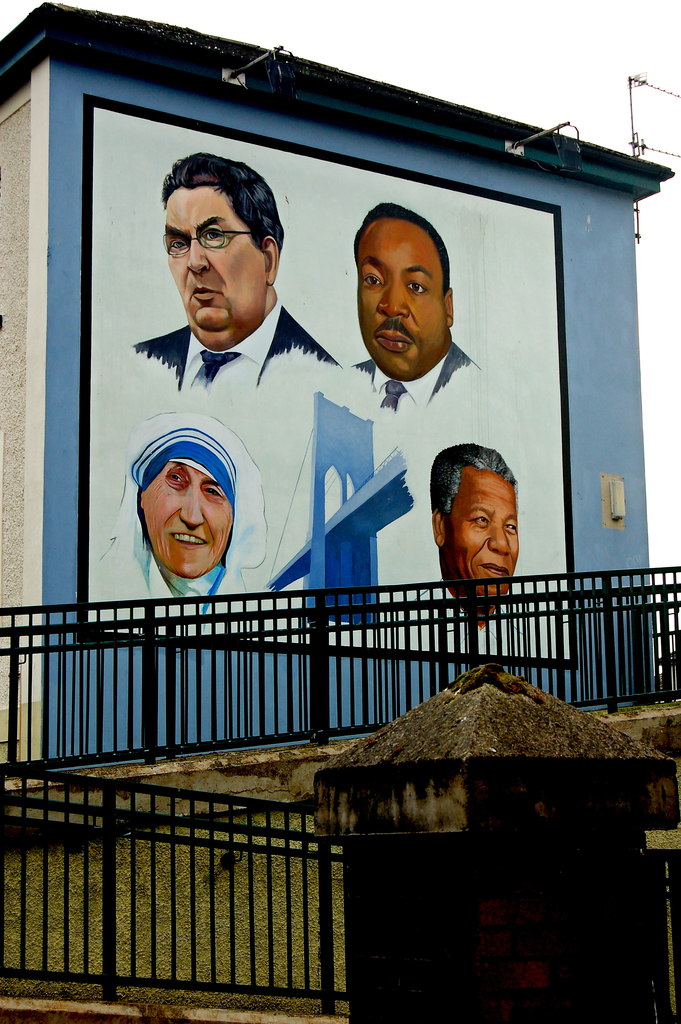 The recent passing of John Hume evoked comparisons with other Irish leaders who sought in their time to advance the cause of Irish self-government and independence by peaceful means. The greatest achievement of Daniel O’Connell (1775-1847) was Catholic Emancipation: he played a leading role in ending the ban on Catholics from sitting in parliament and holding senior government offices. He went on to launch an unsuccessful but non-violent campaign to repeal the Act of Union with Great Britain so that Ireland would have her own parliament back again, with a more-inclusive membership.
The other contender for greatest non-violent leader was Charles Stewart Parnell (1846-91) who used obstructionist tactics in the British parliament to promote the cause of land reform and the rights of tenant farmers. As leader of the Irish Parliamentary Party he also made impressive progress towards achieving the objective of Home Rule for Ireland by constitutional means. But it all went wrong for him when his adulterous relationship with Kitty O’Shea, wife of one of his Members of Parliament, came to light.
So what were the achievements of John Hume (1937-2020) and how to do they compare with those of O’Connell and Parnell? The most obvious one was the leading role he played in persuading the Provisional IRA to lay down their arms so that their political counterparts in the Sinn Féin party could fully participate in the political process. There were some critics who felt he should have kept the Provos at bay and that it was a mistake to facilitate the entrance of Sinn Féin to the stage of “normal” politics, because it reduced the status of his own Social Democratic and Labour Party (SDLP) to the second rank on the nationalist side of the fence in Northern Ireland. Most observers would however take the view that the demotion of the SDLP (for the time being anyway) was a price worth paying in the cause of peace. Read more.